Nutrients of Longing
Video Performance, 2026
Nutrients of Longing emerged from my desire to explore food as an emotional nutrient capable of reconnecting us with culture, memory, family, and the feeling of home. I chose pão de queijo, a traditional Brazilian food, as the central element of this work. Originally from the state of Minas Gerais, it is made from cassava starch and cheese, baked until it becomes golden on the outside while remaining soft inside. In Brazil, it is much more than a snack. It is often shared with coffee in the afternoon, bringing family and friends together around the table. It carries memories of affection, hospitality, and everyday rituals.
Living in Maine, far from Brazil, I realized that pão de queijo had become one of the few foods I could easily prepare with accessible ingredients. Every time I made it, I experienced something beyond taste. The smell, texture, and ritual of baking became a bridge connecting me to memories, people, and places that physically no longer surrounded me. This realization inspired the work.
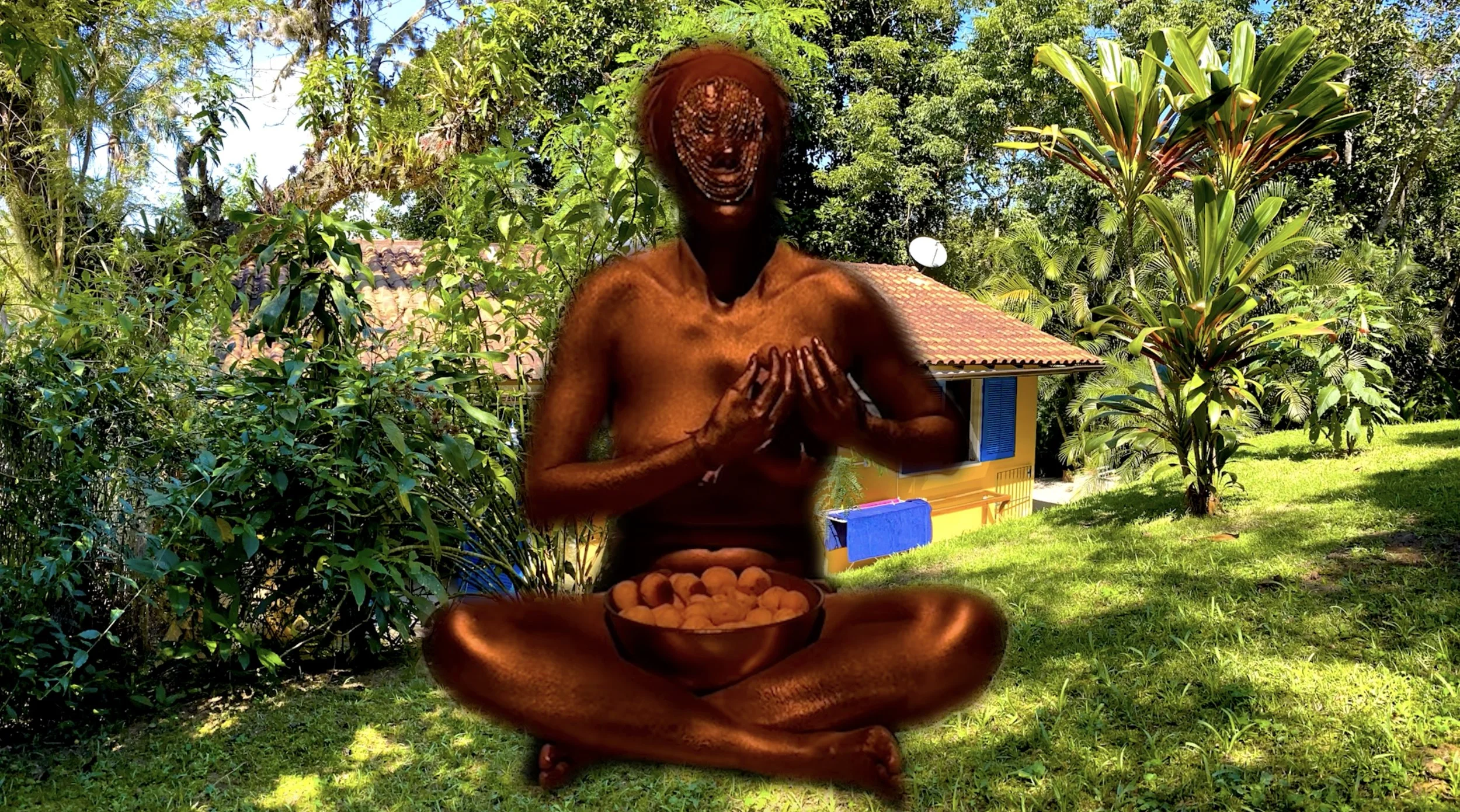
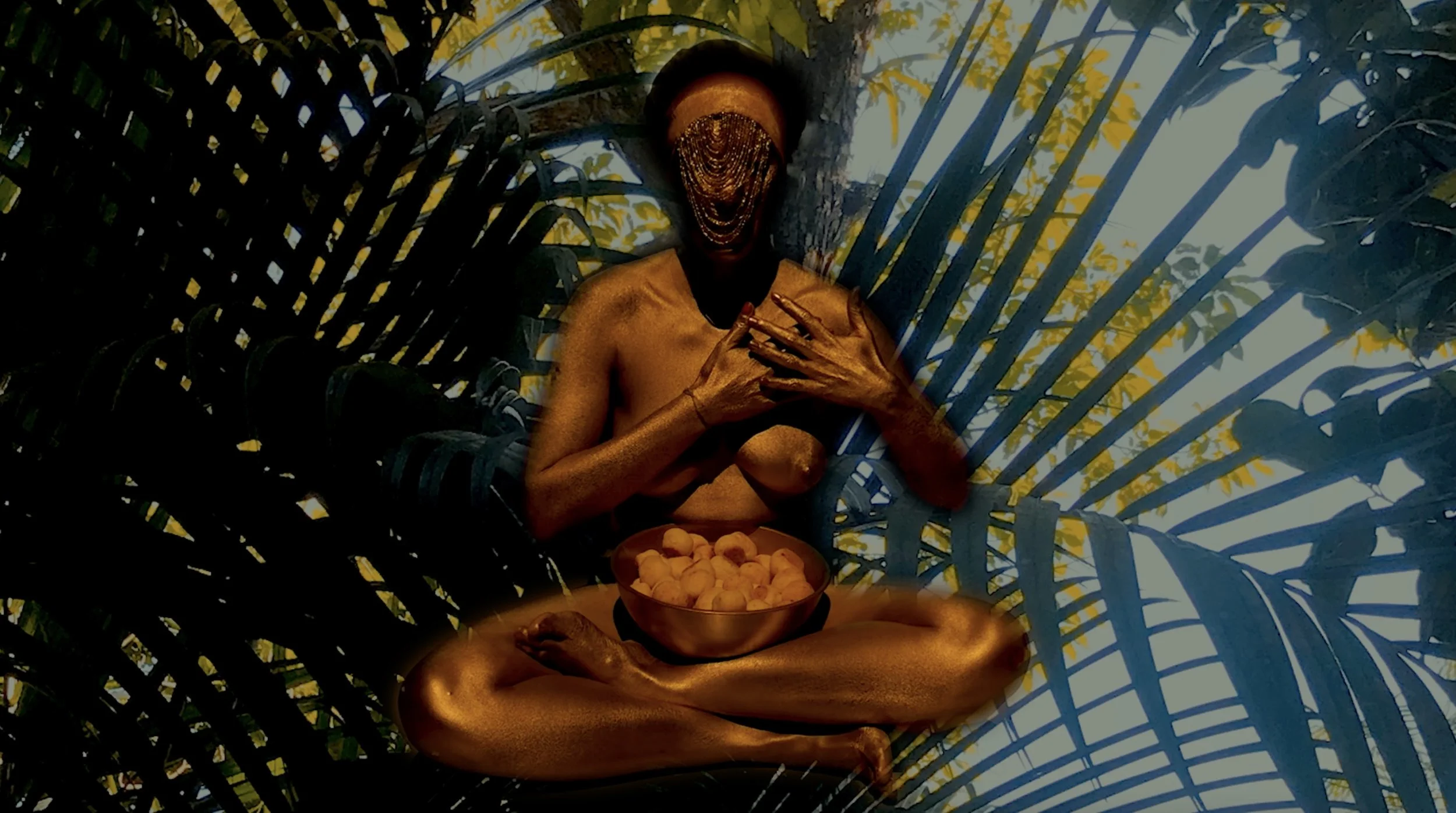
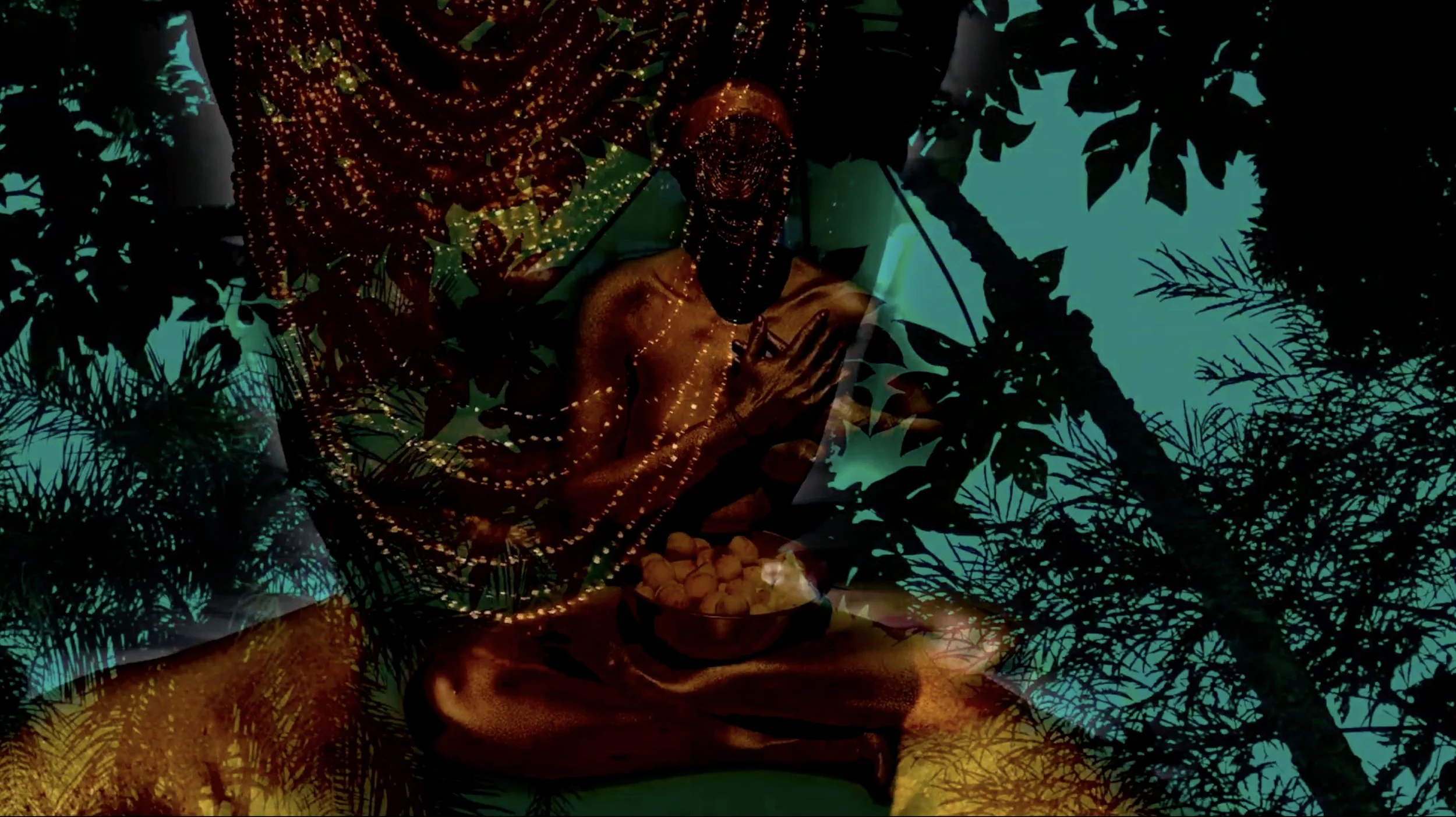
The performance investigates how food can nourish not only our bodies but also our emotional and cultural identities. It asks how something as ordinary as preparing and eating a familiar food can reconnect us with our histories and reshape our experience of belonging while living far from home. The golden figure that appears in the work was inspired by Oxum, the Afro-Brazilian orixá associated with fresh water, beauty, fertility, abundance, and gold. Covered in golden beads, the body becomes both human and symbolic. Rather than representing Oxum literally, the figure evokes her qualities as a poetic presence that embodies nourishment, care, memory, and transformation.
The work also creates a dialogue between two landscapes that have shaped my life: Pedra Branca, in Rio de Janeiro, Brazil, and the forests and coastline of Maine, where I currently live. These places coexist through memory rather than geography, revealing how migration allows multiple territories to inhabit the same body simultaneously.
Throughout the video, food functions as a material archive of longing. The gestures of preparing, carrying, and sharing pão de queijo become acts of remembering and rebuilding a sense of home. The work suggests that belonging is not fixed to a single place but is continually recreated through everyday practices, rituals, and relationships.
At the end of the videoperformance, the audience is invited to eat pão de queijo together. This gesture transforms spectators into participants, extending the work beyond observation into a shared sensory experience. Eating becomes an act of collective memory, where taste, smell, and touch create a temporary community connected through affection and hospitality.
Ultimately, Nutrients of Longing reflects on migration, memory, and identity through the intimate language of food. It proposes that nourishment is never purely physical; it is also emotional, cultural, and relational. Even when we are far from home, small rituals of care can sustain our sense of belonging and reconnect us with the people, places, and histories that continue to live within us.